Dragon (2025) – A Cinematic and Philosophical Triumph

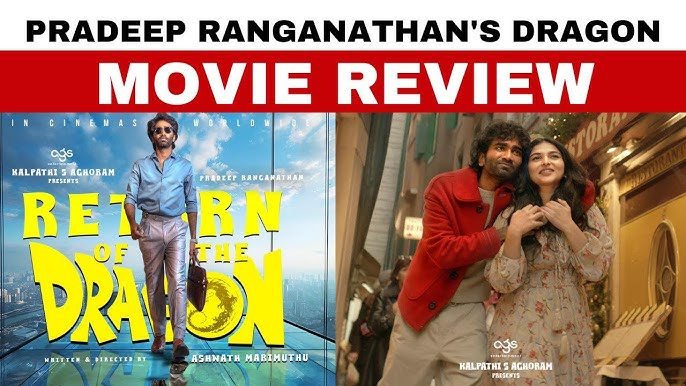
Dragon (2025) – A Cinematic and Philosophical Triumph “Dragon,” directed by Ashwath Marimuthu and starring Pradeep Ranganathan, marks a significant evolution in contemporary Tamil cinema. Seamlessly blending comedy, romance, and socio-philosophical elements, the film transcends conventional storytelling, offering a profound examination of ambition, identity, and ethical compromise. Released on February 21, 2025, “Dragon” not only captivates audiences but also sparks critical reflection on the moral dimensions of success and the psychological ramifications of deception.
Expanding the Narrative Structure and Thematic Depth
The protagonist, D. Raghavan—nicknamed “Dragon”—undergoes a profound transformation, serving as a vehicle for the film’s exploration of self-reinvention and ethical dilemmas. Once an academically diligent student, Raghavan’s trajectory is abruptly altered by romantic disillusionment, leading him into a state of existential stagnation. His subsequent academic neglect results in an overwhelming 48 arrears, reinforcing his descent into inertia. However, a newfound romantic entanglement with Keerthy (Anupama Parameswaran) forces him into a crisis of self-definition, propelling him toward morally ambiguous actions to establish professional legitimacy. His fabrication of academic credentials, initially perceived as a shortcut to success, gradually spirals into a series of inescapable consequences, culminating in an intense existential reckoning. Dragon (2025) – A Cinematic and Philosophical Triumph
While focusing on Raghavan’s personal evolution, “Dragon” simultaneously critiques the systemic pressures that normalize deception as a means of social mobility. The screenplay’s intricate structure ensures that these broader socio-cultural implications remain central to the narrative, making the film deeply resonant within contemporary discourse on ambition and institutional expectations.
Directorial Vision and Cinematic Execution

Ashwath Marimuthu, acclaimed for his nuanced depiction of youth in “Oh My Kadavule,” crafts a film that seamlessly oscillates between entertainment and intellectual depth. His directorial approach balances humor with critical discourse, ensuring that comedic elements enhance, rather than dilute, the film’s thematic gravitas. Dragon (2025) – A Cinematic and Philosophical Triumph
The film’s pacing is finely calibrated, maintaining engagement while allowing for deep philosophical inquiry. Marimuthu’s visual storytelling prioritizes organic character development over expository dialogue, immersing audiences in the protagonist’s psychological and moral dilemmas. His meticulous use of mise-en-scène, coupled with an acute awareness of performative subtlety, results in a film that is as visually compelling as it is intellectually stimulating. Dragon (2025) – A Cinematic and Philosophical Triumph
Performances and Character Development
Pradeep Ranganathan delivers a performance of extraordinary nuance, skillfully balancing comedic exuberance with profound introspection. His portrayal of Raghavan navigates the delicate interplay between levity and existential crisis, rendering the character both relatable and deeply compelling.
Anupama Parameswaran’s Keerthy is equally layered, embodying the tensions between romantic idealism and pragmatic realism. Kayadu Lohar’s Pallavi, though occupying a secondary narrative role, contributes to the film’s thematic complexity. Meanwhile, Mysskin’s portrayal of Principal Mayilvahanan serves as both an antagonistic force and an intellectual counterpoint, enabling some of the film’s most thought-provoking exchanges. Dragon (2025) – A Cinematic and Philosophical Triumph
The supporting cast enriches the film’s textual depth, their performances integral to its exploration of ambition, deception, and moral ambiguity. The dynamic interplay among the characters creates an engaging and multifaceted narrative.
Dragon (2025) – A Cinematic and Philosophical Triumph
Leon James’s musical score functions as an auditory tapestry, shifting between lively, youth-centric compositions and contemplative melodies that reflect Raghavan’s internal struggles. Complementing this is an intricate sound design that accentuates the film’s shifting emotional tones, heightening its overall impact.
Cinematographer Niketh Bommi employs a visually sophisticated approach, contrasting the vibrant chaos of collegiate life with the rigid formality of the corporate world. This visual dichotomy reinforces the film’s thematic interrogation of authenticity and institutional conformity. Production design further accentuates these contrasts, seamlessly transitioning between uninhibited youthful energy and the structured rigidity of professional aspirations.
Editing plays a crucial role in maintaining narrative balance, ensuring that comedic elements do not overshadow the film’s philosophical depth. The precision of these technical components culminates in a cinematic experience that is both aesthetically captivating and intellectually rigorous. Dragon (2025) – A Cinematic and Philosophical Triumph
Socio-Cultural Critique and Ethical Inquiry
Beyond its cinematic brilliance, “Dragon” serves as a critique of societal constructs that govern ambition, success, and moral integrity. The film underscores the consequences of deception while questioning the systemic structures that make such transgressions appear necessary. It invites viewers to reflect on the ethical contingencies that underpin contemporary aspirational pursuits.
A key thematic exploration within “Dragon” is the generational tension surrounding academic and career expectations. Raghavan’s journey mirrors the broader struggle of modern youth, who must navigate familial pressures, personal ambitions, and societal benchmarks for success. The film offers an incisive commentary on the existential toll of these competing forces, making it an insightful meditation on identity, ambition, and moral agency in a hypercompetitive world. Dragon (2025) – A Cinematic and Philosophical Triumph
Critical Reception and Lasting Impact

“Dragon” has received widespread critical and commercial acclaim, particularly resonating with younger audiences who identify with its exploration of self-actualization and ethical dilemmas. The film’s reception has been amplified by digital discourse, with audiences praising its narrative complexity and authentic performances. Dragon (2025) – A Cinematic and Philosophical Triumph
At the box office, “Dragon” has proven to be a resounding success, fueled by strong word-of-mouth endorsements and glowing critical reviews. Marimuthu’s directorial craftsmanship and Ranganathan’s commanding performance have been widely lauded, cementing the film’s status as a landmark in Tamil cinema. Dragon (2025) – A Cinematic and Philosophical Triumph
Moreover, the film’s impact extends beyond its immediate success, heralding a shift in audience expectations. “Dragon” exemplifies the growing demand for cinema that transcends mere entertainment, engaging with complex ethical and philosophical themes. Its legacy will likely be measured by its influence on subsequent films tackling similar existential and moral inquiries. Dragon (2025) – A Cinematic and Philosophical Triumph
Conclusion
“Dragon” stands at the intersection of entertainment and profound philosophical inquiry. With its sophisticated screenplay, deeply realized characters, and masterful direction, the film defies conventional genre limitations, offering an experience that is both thought-provoking and emotionally resonant.
Through its thematic depth and technical finesse, “Dragon” marks a pivotal moment in Tamil cinema’s evolution—one that embraces complexity, introspection, and global cinematic discourse. It is, unequivocally, a film that warrants critical discussion and scholarly analysis.
For an immersive glimpse into its aesthetic and thematic brilliance, watch the official trailer:
Dragon Movie Review – Pradeep Ranganathan